
History of the Academy Awards
, by B Thomas Hartwell, 2 min reading time
, by B Thomas Hartwell, 2 min reading time
The Academy Awards, more commonly known as the Oscars, are one of the world’s most prestigious and sought-after film awards. While the glitz and glamour of the awards ceremony are often the focus of attention, the history behind the iconic Oscar trophy is equally fascinating.
The Oscars, officially the Academy Awards, began in 1929 as a private dinner at the Hollywood Roosevelt Hotel. The Academy of Motion Picture Arts and Sciences honored films from 1927 and 1928, and the silent World War I drama Wings won the award now recognized as the first Best Picture Oscar. The winners had already been announced three months before the ceremony. First Academy Awards · Oscars on the Air
The awards also expanded as filmmaking evolved. Film editing, original score, and song joined the lineup in the 1930s, and the ceremony grew to recognize a wider range of work behind the camera. Academy Awards presentation history
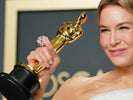
The design of the Oscar trophy is credited to Cedric Gibbons, the head of the art department at Metro-Goldwyn-Mayer (MGM) studios, and sculptor George Stanley. The inspiration for the design is said to have come from a combination of classical and Art Deco styles, with a focus on the idealized human form.
The Oscar statuette has kept its original design since 1929, though the size of its base varied until the Academy adopted the current standard in 1945. The film reel beneath the figure has five spokes, one for each of the Academy’s original branches.
Winning an Oscar comes with a condition. Before selling or otherwise parting with the statuette, winners must first offer to sell it back to the Academy for $1. The same rule applies to heirs who inherit the trophy.